The evolution of digital signage and visual display technology has always been driven by a singular pursuit: the desire to blur the line between digital content and the physical environment. For decades, traditional displays were bound by rigid, flat rectangles that dictated where and how content could be showcased. Today, a paradigm shift is underway. The advent of the Flexible LED Display has shattered these geometric limitations, offering architects, designers, and brand marketers unprecedented creative freedom. By combining high-definition visual performance with remarkable pliability, a Flexible LED Display turns ordinary walls, pillars, and curved surfaces into breathtaking digital canvases that redefine modern visual experiences.
The Technology Behind the Bend: Understanding Flexible LED Displays
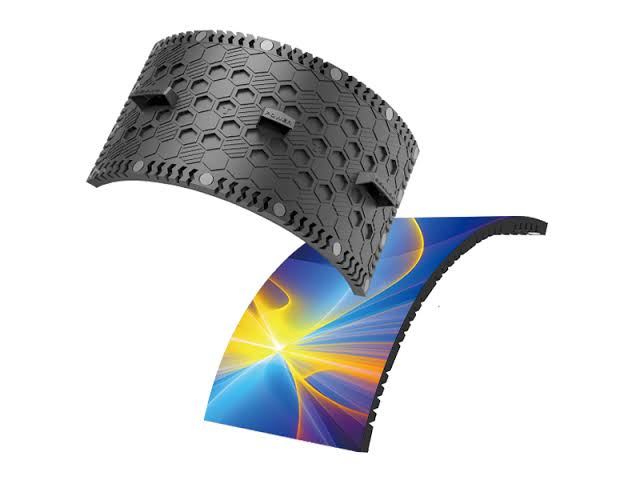
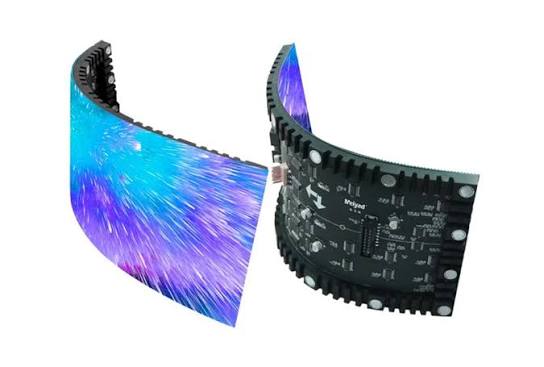
To truly appreciate how a Flexible LED Display achieves its mesmerizing effects, it is essential to understand the engineering principles that set it apart from conventional screens. Standard LED panels rely on rigid printed circuit boards and heavy aluminum cabinets, which restrict them to flat planes. In contrast, a Flexible LED Display utilizes advanced soft substrates, specialized rubber or silicone masking, and ultra-thin, highly malleable PCB materials.
This innovative construction allows individual modules to bend, twist, and curve without compromising electrical integrity or image quality. Designers can configure a Flexible LED Display into concave shapes, convex waves, cylindrical wraps, and even spherical formations. Despite their bendability, these screens retain the high brightness, vibrant color reproduction, and high refresh rates characteristic of premium LED technology. The result is a seamless fusion of structural adaptability and dazzling visual fidelity that empowers creators to bring complex, imaginative concepts to life.
Breaking Spatial Boundaries: Architectural Integration and Design Freedom
Architecture has traditionally been defined by hard angles, flat walls, and rigid structural elements. However, modern interior design and architectural planning increasingly favor organic shapes, fluid lines, and immersive environments. A Flexible LED Display serves as the ultimate bridge between structural engineering and digital art, allowing displays to hug the natural contours of a building rather than forcing the architecture to accommodate a bulky screen.
Imagine entering a grand hotel lobby where a massive, undulating Flexible LED Display flows effortlessly around a central cylindrical pillar, depicting cascading waterfalls or abstract fluid art that reacts to ambient lighting. Because a Flexible LED Display can be customized to fit virtually any radius or irregular geometry, architects no longer need to sacrifice aesthetic integrity for the sake of digital integration. Instead, the screen becomes an organic component of the space itself, transforming functional structural pillars and curved architectural features into mesmerizing focal points.
Elevating Commercial and Entertainment Venues with Innovative Visual Experiences
In today’s competitive retail and entertainment landscapes, capturing and holding consumer attention requires more than static signage or standard flat screens. Brands are constantly searching for immersive storytelling tools that evoke emotional responses and drive foot traffic. A Flexible LED Display delivers precisely this impact, creating unforgettable sensory experiences that turn passive passersby into active participants.
In high-end retail environments, a strategically curved Flexible LED Display mounted above an entrance or wrapped around a storefront window draws the eye from every angle. Retailers can showcase dynamic product animations that seem to leap off the curved surface, providing a futuristic shopping ambiance. Similarly, in entertainment venues such as concert arenas, museums, and theme parks, a Flexible LED Display enhances stage designs and immersive exhibits. By wrapping screens around performance stages or integrating them into interactive museum tunnels, creators can envelop audiences in a 360-degree visual journey that standard screens simply cannot replicate.
Technical Advantages of Flexible LED Screens Over Traditional Panels
Beyond their aesthetic versatility, modern flexible display solutions offer numerous practical and technical advantages that make them a smart investment for commercial deployments.
Lightweight Construction and Easy Installation Because a Flexible LED Display eliminates the heavy metal framing and thick cabinets found in traditional setups, it is significantly lighter. This reduced weight makes transportation, handling, and installation much easier, especially when mounting displays to curved walls or hanging them from ceilings.
Magnetic Mounting and Seamless Splicing Most flexible modules utilize strong magnetic attachment systems. This allows technicians to snap individual modules onto customized metal frames with absolute precision. The magnetic design also ensures seamless splicing, eliminating visible grid lines and creating a completely uniform, uninterrupted visual surface that enhances overall image immersion.
Durability and Heat Dissipation Advanced materials ensure that bending and curving do not damage the internal circuitry. Furthermore, innovative thermal management designs allow a Flexible LED Display to dissipate heat efficiently despite its compact and pliable profile, ensuring long-term operational stability and vibrant performance even during continuous use.
Future Trends and the Evolution of Flexible Display Technology
As manufacturing techniques continue to advance, the potential applications for a Flexible LED Display are expanding exponentially. Researchers are currently focusing on increasing pixel densities further, pushing into finer pixel pitches that allow for ultra-high-definition viewing even at close range. This means that curved retail displays and wearable or rollable digital signage will become even sharper and more lifelike.
Another exciting frontier is the integration of interactivity and smart sensors. Future iterations of a Flexible LED Display will likely feature touch sensitivity and responsive software integration, allowing surfaces to change their visual output based on proximity, movement, or sound. Imagine a corridor lined with a Flexible LED Display that ripples and shifts colors as people walk past, creating a deeply personalized and interactive environment. As smart city initiatives and experiential marketing continue to grow, flexible visual technology will undoubtedly remain at the forefront of digital innovation.
Conclusion
The shift from rigid, flat digital screens to dynamic, adaptable visual surfaces represents a monumental leap forward in how we interact with our environments. A Flexible LED Display is much more than a technological novelty; it is a transformative medium that liberates designers from the constraints of traditional geometry. By seamlessly integrating into curved architecture, elevating commercial spaces, and delivering captivating immersive experiences, a Flexible LED Display proves that the future of visual communication is fluid, boundless, and endlessly inspiring.