Introduction
Indoor playgrounds have become popular destinations for children and families, offering exciting environments where young visitors can play, explore, socialize, and develop essential skills. From shopping malls and family entertainment centers to schools, nurseries, and dedicated indoor play facilities, these spaces provide opportunities for recreation throughout the year. As demand continues to grow, choosing the right indoor playground Manufacturer has become an important decision for business owners and investors.
A professional manufacturer does more than supply slides, climbing frames, ball pits, and interactive play structures. It combines creative design, reliable materials, safety-focused engineering, customization, and dependable customer service to deliver a complete play solution. Understanding what separates an experienced manufacturer from an ordinary supplier can help businesses make informed decisions and create playgrounds that attract visitors while supporting children’s development.
1. Strong Commitment to Safety and Quality
Safety is one of the most important characteristics of a professional indoor playground manufacturer. Children’s play equipment must be designed to reduce foreseeable risks while allowing children to enjoy different activities comfortably.
A reputable manufacturer considers safety throughout the entire production process. This includes selecting appropriate materials, designing stable structures, covering exposed edges, and ensuring that equipment is suitable for its intended age group. Soft padding, secure connections, protective barriers, and carefully designed climbing areas can all contribute to a safer play environment.
Quality control is equally important. Manufacturers should inspect materials and finished components to identify defects before installation. They should also provide clear information about relevant safety standards, testing procedures, maintenance requirements, and product limitations.
Businesses should ask potential suppliers which standards apply to their equipment and whether independent testing or certification is available. Depending on the country and project, applicable requirements may include recognized playground safety standards and fire-safety rules.
A strong commitment to safety demonstrates that the manufacturer understands its responsibilities to customers, operators, parents, and children.
2. Creative and Innovative Playground Designs
A successful indoor playground needs to capture children’s attention while offering an enjoyable experience for different ages and interests. Professional manufacturers understand that creative design can help a facility stand out in a competitive entertainment market.
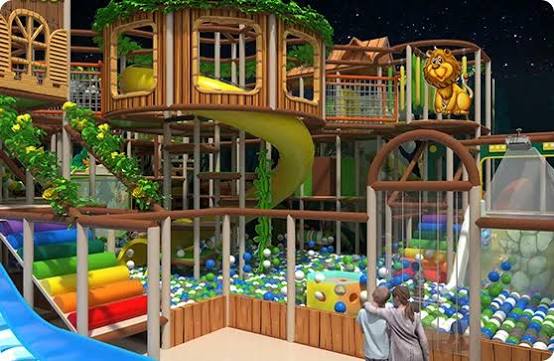
Instead of offering only standard equipment arrangements, experienced designers develop layouts that combine movement, exploration, imagination, and interactive play. These may include colorful slides, climbing walls, obstacle courses, ball pools, tunnels, role-play areas, and sensory activities.
Themed playgrounds are another effective option. Designs inspired by forests, space exploration, underwater adventures, castles, or imaginative cities can transform an ordinary play area into a memorable destination.
However, attractive visuals should support functionality rather than replace it. Equipment placement must account for supervision, circulation, appropriate separation between activities, and efficient use of available space.
A professional indoor playground manufacturer balances appearance with practicality, creating environments that are engaging for children and convenient for the adults responsible for operating them.
3. Customization to Meet Different Business Needs
Every indoor playground project has different requirements. A small play area inside a restaurant will have different priorities from a large family entertainment center or a commercial facility inside a shopping mall.
Professional manufacturers recognize these differences and offer customization options based on the customer’s budget, target audience, available floor area, and business objectives.
Customization may include:
- Size and layout: Equipment designed to fit the available floor space.
- Color schemes: Visual themes that complement a venue’s identity.
- Activity selection: A combination of slides, climbing structures, soft play zones, and interactive features.
- Age-specific areas: Separate activities for toddlers, younger children, and older visitors where appropriate.
- Brand integration: Selected colors, decorative elements, or themed details that support the business’s identity.
A manufacturer should also consider ceiling height, access points, structural restrictions, emergency exits, and the location of support columns.
This personalized approach helps business owners use their space effectively while developing a playground that reflects their commercial goals.
4. Durable Materials and Advanced Manufacturing
The durability of playground equipment directly affects its long-term value. Indoor play structures may experience heavy daily use, especially in busy entertainment centers, so materials must be selected with repeated activity, cleaning, and maintenance in mind.
Professional manufacturers carefully evaluate the materials used for frames, panels, flooring, padding, nets, slides, and connectors. Metal frames should have suitable strength and corrosion protection, while foam padding and surface coverings should be appropriate for their intended use.
Materials must also be compatible with the expected environment. For example, surfaces in high-contact areas should be easy to clean, and fabric or plastic components should meet relevant requirements for their application.
Modern manufacturing methods can improve consistency and precision. Depending on the equipment, manufacturers may use computer-aided design, digital measurements, automated cutting, and standardized assembly procedures to reduce production errors.
However, advanced machinery alone does not guarantee quality. Skilled workers, documented inspections, and careful assembly remain essential.
When evaluating a supplier, business owners should ask about expected service life, replacement parts, cleaning instructions, and warranty coverage. These details help them understand the likely maintenance demands of their investment.
5. Efficient Space Planning and Functional Layouts
A professional indoor playground manufacturer understands that good space planning is just as important as the equipment itself. An attractive design may fail commercially if it creates congestion, limits supervision, or makes it difficult for children to move between activities.
Effective layouts organize play zones according to their functions and intended users. Active climbing and sliding areas may require different arrangements from quieter sensory corners or toddler sections.
Manufacturers should consider the available floor area, visitor capacity, entry and exit points, staff access, and the location of seating for parents. They should also plan appropriate circulation routes and preserve access to emergency exits.
A well-organized playground allows children to move between activities without unnecessary obstacles. It also helps staff monitor play areas and manage busy periods.
For commercial facilities, efficient space planning can improve the visitor experience while supporting daily operations. The objective is not simply to fit as much equipment as possible into a room, but to create a balanced environment that uses the available space responsibly.
6. Professional Installation and Project Management
Even well-designed equipment can create problems if it is installed incorrectly. A reliable manufacturer therefore provides clear installation guidance and, where offered, professional installation services.
The process generally begins with reviewing the site dimensions and confirming the final design. The manufacturer and customer can then coordinate production schedules, transportation, delivery, installation, and inspection.
Professional project management helps reduce misunderstandings and keeps the work organized. Customers should receive information about expected timelines, site preparation, installation responsibilities, and any requirements that must be completed before equipment arrives.
After installation, the playground should be inspected to confirm that components are properly secured and that the completed facility matches the approved design. Any required compliance checks should also be completed before opening.
Clear communication throughout this process makes it easier for business owners to prepare their premises and plan their launch dates.
7. Reliable Customer Support and After-Sales Service
A manufacturer’s responsibilities should not end when the equipment is delivered. Ongoing support is an important factor that distinguishes a professional supplier from a company focused only on completing a sale.
Indoor playgrounds require regular cleaning, inspections, and occasional repairs. Components may need adjustment or replacement as the facility experiences continued use.
A dependable manufacturer provides accessible maintenance instructions, product documentation, warranty details, and guidance on obtaining compatible replacement parts. Some manufacturers may also offer technical assistance, staff training, or scheduled inspection services.
These services can help operators respond to maintenance needs before they become more disruptive or expensive.
Before signing a contract, customers should clarify what the warranty covers, which parts are excluded, how support requests are handled, and whether spare components will remain available.
A transparent after-sales policy demonstrates a long-term commitment to customer satisfaction and equipment performance.
8. Compliance With Industry Standards
Professional manufacturers understand that playground equipment must meet the requirements applicable to its location and intended use. Regulations and technical standards may differ between countries, so customers should not assume that a product suitable for one market automatically satisfies the rules of another.
A responsible supplier can explain the standards used during design and production and provide relevant documentation where available.
Depending on the project, considerations may include structural stability, impact-absorbing surfaces, entrapment risks, fire performance, accessibility, and the suitability of equipment for different age groups.
Manufacturers should also help customers understand their responsibilities as facility operators. Safe operation depends on more than product design; installation quality, supervision, routine inspections, and timely maintenance all play important roles.
Choosing a supplier that takes compliance seriously can help businesses prepare for inspections and establish appropriate operating procedures.
9. Transparent Pricing and Long-Term Value
Price is an important consideration when investing in commercial indoor playground equipment, but the lowest quotation does not necessarily offer the best value.
Professional manufacturers provide clear quotations that explain what the customer will receive. These may include equipment, design services, shipping, installation, warranties, and additional features.
Comparing quotations on an equivalent basis helps business owners identify differences in material quality, equipment specifications, support services, and project scope.
It is also useful to consider long-term operating expenses. Durable components, accessible replacement parts, straightforward cleaning procedures, and effective maintenance support may reduce the inconvenience and cost of managing the facility over time.
A trustworthy manufacturer explains pricing openly and avoids making unrealistic promises about durability, visitor numbers, or profitability.
The best investment is one that balances initial cost, safety, design quality, operational needs, and expected long-term performance.
10. A Strong Reputation and Proven Experience
A manufacturer’s reputation can provide useful insight into its professionalism and reliability. Businesses should review completed projects, customer feedback, product documentation, and examples of previous designs before making a decision.
Photographs and case studies can help customers understand the manufacturer’s design capabilities. References from previous clients may offer additional information about communication, installation, product quality, and after-sales support.
It is also worth asking whether the company has experience with projects similar in size and purpose to the proposed facility.
Clear answers, realistic timelines, detailed specifications, and a willingness to discuss potential challenges are positive signs. Customers should be cautious of suppliers that avoid technical questions or make broad claims without supporting evidence.
A proven track record does not guarantee that every project will be successful, but it can help businesses assess whether a manufacturer has the capabilities required for their particular needs.
Conclusion
What makes a professional indoor playground manufacturer stand out in the market is the ability to combine safety, creativity, durable construction, customization, efficient planning, and dependable customer service. These qualities help transform individual play structures into complete environments that support children’s enjoyment and meet the practical needs of facility operators.
For businesses planning to invest in an indoor playground, choosing the right partner requires more than comparing prices or looking at attractive designs. It involves examining material quality, applicable safety standards, installation procedures, warranty conditions, and long-term support.
A manufacturer that prioritizes these factors can help customers develop engaging, functional, and well-maintained play spaces. By evaluating suppliers carefully and focusing on long-term value, business owners can make more informed decisions and create indoor playgrounds that provide enjoyable experiences for children and families.