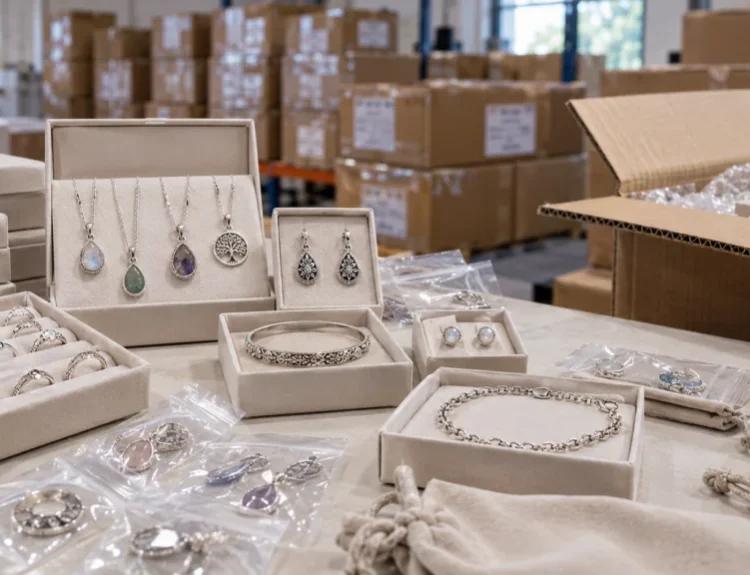
The journey of bringing a piece of fine jewelry to life is an intricate blend of artistic vision, advanced technical engineering, and master craftsmanship. Every ring, necklace, bracelet, and earring begins as a fleeting thought or a rough sketch, which undergoes a rigorous transformation before taking its final physical form. For fashion brands, independent designers, and large retail chains, turning creative concepts into tangible, stunning products requires a reliable production partner. Working with a dedicated Chinese jewelry manufacturer allows brands to tap into decades of specialized craftsmanship, cutting-edge technology, and scalable manufacturing solutions to bring even the most complex design visions to reality.
The Spark of Inspiration: Conceptualization and Initial Trends
Every extraordinary jewelry piece starts with an idea. Inspiration can spring from virtually anywhere—nature’s organic geometries, architectural wonders, vintage art movements, modern pop culture, or shifting consumer lifestyle trends. During this initial ideation stage, designers create mood boards, gather color palettes, and experiment with thematic concepts.
At this juncture, market research plays a critical role. Designers and brand strategists evaluate what resonates with their target audience. Whether the goal is to produce minimalist everyday wear or grand, gem-encrusted statement pieces, understanding consumer preferences ensures that creativity is matched with commercial appeal.
Transforming Concepts into Visual Drafts
Once the direction is established, the idea moves from abstract thought to visual visualization through hand-drawn sketches. This stage allows designers to quickly explore different proportions, silhouettes, and aesthetic balance without technical constraints.
Refining Hand Sketches
Hand-drawn illustrations capture the artistic spirit and emotion of the design. These initial drawings highlight key visual elements, such as how light interacts with gemstones, how metal curves around a finger, or how individual components link together.
Technical Feasibility Analysis
While artistic freedom is essential, a design must also be practical and wearable. Experienced jewelry creators review hand sketches to identify potential engineering challenges. They evaluate key structural factors:
- Is the setting secure enough to hold the stone during daily wear?
- Will the piece be comfortable, lightweight, and properly balanced?
- Can the design be efficiently produced on a larger scale?
Collaborating with a skilled Chinese jewelry manufacturer early in this stage ensures that creative concepts are optimized for real-world production without sacrificing their artistic integrity.
Digital Precision: Computer-Aided Design (CAD) and 3D Modeling
The modern jewelry creation process heavily relies on Computer-Aided Design (CAD). CAD technology acts as the bridge between creative conceptualization and precise physical manufacturing.
Using specialized 3D modeling software, designers convert two-dimensional hand sketches into highly accurate digital models. Every micro-detail is precisely calculated during this step:
- Prong Placement: Ensuring prongs hold gemstones securely while maximizing light entering the stone.
- Wall Thickness: Calculating exact metal dimensions to maintain durability while preventing unnecessary weight.
- Tolerance and Fit: Designing interlocking mechanisms, hinges, and clasps that function seamlessly.
3D modeling allows creators to view the jewelry piece from every angle, test different metal finishes, and swap out gemstones digitally before any physical materials are used.
Prototyping and Wax Model Creation
After the CAD model is finalized and approved, it is time to move from the digital realm back into the physical world. This step relies on additive manufacturing and high-precision 3D printing.
3D Printing High-Detail Wax Models
Using specialized 3D printers, the CAD file is translated into a precise resin or wax model. This physical prototype is an exact replica of the planned jewelry piece.
Master Mold Creation
For designs intended for mass production, the physical prototype is used to create a durable rubber or silicone master mold. This master mold enables a Chinese jewelry manufacturer to reproduce identical wax models rapidly, maintaining consistency across thousands of units during full-scale production.
The Art of Metal Casting: Lost-Wax Technique
With the wax prototype ready, the classic yet modernized process of lost-wax casting begins. This ancient metalworking method remains the gold standard for high-precision jewelry production.
Tree Assembly and Flask Preparation
Multiple wax models are attached to a central wax stem, forming a shape known as a “casting tree.” This tree is placed inside a metal flask and surrounded by a liquid ceramic plaster called investment material.
The Burnout and Pouring Process
- Burnout: The flask is placed into a high-temperature kiln. As the plaster hardens, the wax inside melts away entirely, leaving behind a hollow cavity in the exact shape of the jewelry pieces.
- Metal Injection: Molten metal—such as sterling silver, karat gold, platinum, or brass—is poured or centrifugally injected into the cavity, filling every detail left by the melted wax.
- Quenching: Once the metal cools and solidifies, the investment material is washed away, revealing the freshly cast metal jewelry tree.
Master Hand Craftsmanship: Assembly and Polishing
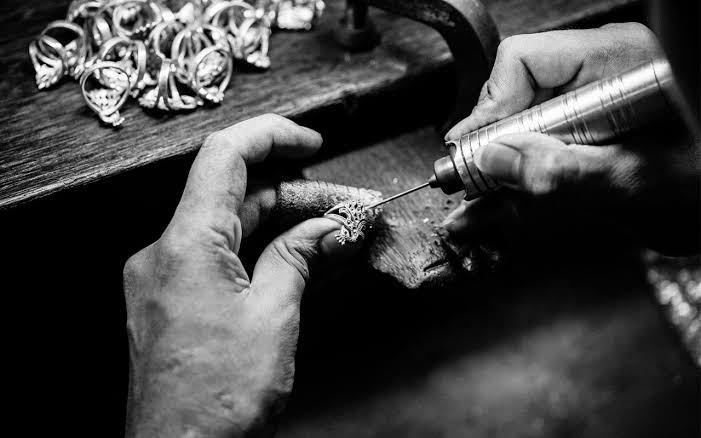
Casting yields raw metal components that require extensive manual refinement. Skilled artisans take over to turn raw metal castings into refined works of art.
Component Assembly and Soldering
Jewelry pieces with multiple parts—such as earring posts, delicate chain links, multi-tier pendants, or complex ring bands—are carefully assembled. Artisans use precision laser welding or traditional torch soldering to join components without damaging delicate surrounding metal.
Filing, Grinding, and Initial Polishing
Raw castings often have minor surface imperfections, sprues, or rough textures. Craftspeople meticulously file, sand, and smooth every edge. Initial polishing passes ensure that undercuts, interior surfaces, and hard-to-reach areas are perfectly smooth before gemstones are set.
Stone Setting: Adding Brilliance and Color
The setting process is one of the most delicate and skill-intensive stages in jewelry manufacturing. Experienced stone setters secure diamonds, colored gemstones, or cubic zirconia into their designated metal mountings.
Depending on the aesthetic requirements of the design, setters utilize various specialized techniques:
- Prong Setting: Elevates the stone to maximize light exposure and brilliance.
- Bezel Setting: Encases the gemstone in a protective collar of metal for a sleek, modern look.
- Pave Setting: Places small stones closely together across a surface to create a shimmering field of light.
- Channel Setting: Suspends stones between two parallel metal walls, ideal for band rings and bracelets.
Precision is paramount during stone setting. A fraction of a millimeter off can cause stones to sit unevenly or put stress on the gem, risking fractures.
Final Polishing, Electroplating, and Quality Control
To achieve a mirror-like shine and rich surface finish, the assembled piece goes through multi-stage final polishing using soft buffing wheels and ultra-fine polishing compounds.
Surface Finishing and Electroplating
If required, jewelry pieces undergo electroplating processes to enhance color, durability, and tarnish resistance. Common plating options include:
- Rhodium Plating: Provides a bright white finish and tarnish protection for white gold and sterling silver.
- Gold Plating (Micron/Vermeil): Applies layers of yellow or rose gold for luxurious color tone.
- E-Coating: Adds a protective transparent outer seal to extend the life of fashion jewelry.
Stringent Quality Inspection
Before any finished piece leaves the production floor, it undergoes rigorous quality assurance inspections. Quality control specialists examine:
- Structural integrity and solder joint strength
- Stone security and alignment
- Uniformity of surface plating and polish
- Smooth operation of hinges, clasps, and safety catches
An experienced Chinese jewelry manufacturer implements multi-tiered inspection protocols at every step to ensure that every finished piece matches the exact specifications of the original CAD design.
Bringing Ideas to the World Stage
The transformation from a creative concept into a finished piece of jewelry is a seamless fusion of imaginative art, digital technology, and timeless hand craftsmanship. By understanding each phase of the production process—from sketch to CAD design, lost-wax casting, stone setting, and final polish—brands can turn their creative vision into market-ready collections. Partnering with an expert manufacturing provider allows creators worldwide to bring their design ideas to life with precision, speed, and enduring beauty.