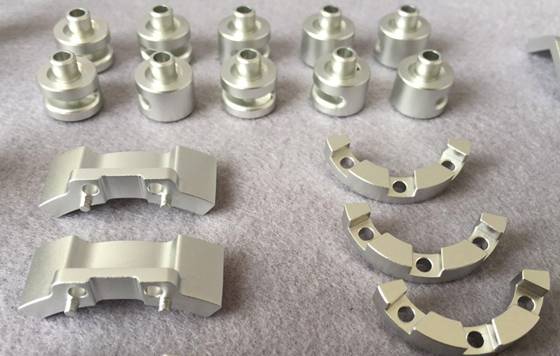
In today’s fast-paced manufacturing landscape, companies are under constant pressure to innovate quickly, reduce risk, and respond to shifting customer demands. Traditional high-volume manufacturing models are no longer the only path to profitability. Instead, many businesses are turning to low volume cnc machining as a strategic solution to bridge the gap between prototyping and mass production.
From startups launching new hardware products to established manufacturers testing new product lines, low volume cnc machining offers flexibility, precision, and cost control. It allows companies to scale production intelligently without committing to large inventory investments or expensive tooling. This article explores how low volume cnc machining supports scalable production, reduces risk, and accelerates time to market.
Understanding Low Volume CNC Machining
Low volume cnc machining refers to the production of small to medium quantities of precision-machined parts using computer numerical control (CNC) equipment. Unlike mass production methods such as injection molding or die casting, this approach does not require extensive tooling or molds.
CNC machining relies on pre-programmed software to control machinery, enabling highly accurate and repeatable part production. Because setup changes are digital rather than tool-based, manufacturers can quickly adjust designs, materials, and quantities. This flexibility makes low volume cnc machining ideal for production runs ranging from a few units to several thousand parts.
It serves as a crucial bridge between rapid prototyping and full-scale manufacturing. Companies can validate designs, test market demand, and refine products without the financial burden associated with large production runs.
Why Scaling Production Is Challenging
Scaling production is rarely straightforward. Businesses often encounter obstacles such as high tooling costs, supply chain uncertainty, quality control issues, and unpredictable demand.
Large-scale manufacturing typically requires substantial upfront investments in molds, dies, or specialized production lines. If market demand falls short, companies are left with excess inventory and sunk costs. On the other hand, underestimating demand can lead to missed sales opportunities and delays.
Low volume cnc machining reduces these risks by allowing gradual scaling. Instead of committing to tens of thousands of units, businesses can produce smaller batches, evaluate performance, and adjust accordingly.
The Role of Low Volume CNC Machining in Scaling
Low volume cnc machining plays a strategic role in phased production growth. Rather than jumping directly from prototype to full mass production, companies can follow a step-by-step approach.
Transitioning from Prototype to Production
After finalizing a prototype, the next challenge is moving into market-ready production. With low volume cnc machining, manufacturers can produce functional, end-use parts that meet tight tolerances and performance requirements.
These production-grade parts can be used for:
- Beta testing
- Pilot programs
- Early market launches
- Trade show demonstrations
- Investor presentations
Because CNC machining supports a wide range of materials, including aluminum, stainless steel, brass, titanium, and engineering plastics, businesses can manufacture parts that closely resemble final production versions.
Supporting Market Testing
Launching a new product involves uncertainty. Customer preferences, performance expectations, and pricing sensitivity may vary. Low volume cnc machining allows companies to release limited batches to gauge market response.
If changes are needed, CAD files can be modified quickly and new iterations produced without scrapping expensive molds. This adaptability significantly reduces financial exposure while maintaining production momentum.
Enabling Gradual Production Ramp-Up
When demand increases, businesses can scale output in manageable increments. Instead of making a dramatic shift to high-volume manufacturing, companies can expand CNC production capacity gradually.
This approach provides:
- Better inventory control
- Reduced storage costs
- Improved cash flow management
- Greater production agility
Low volume cnc machining allows companies to match output closely with real demand, minimizing waste and overproduction.
Cost Advantages of Low Volume CNC Machining
One of the most significant advantages of low volume cnc machining is its cost structure. While per-unit costs may be higher than mass production at extremely large quantities, the overall financial risk is substantially lower.
No Expensive Tooling Investment
Traditional manufacturing methods often require custom molds or dies, which can cost tens of thousands of dollars. For early-stage products or uncertain markets, this investment can be prohibitive.
CNC machining eliminates most tooling expenses. Production relies on digital programming and standard cutting tools, making it far more accessible for small and medium production runs.
Reduced Inventory Risk
Producing large quantities without proven demand ties up capital and increases storage expenses. Low volume cnc machining allows companies to produce only what is needed, improving liquidity and operational efficiency.
Faster Return on Investment
Because setup times are shorter and tooling costs are minimal, companies can bring products to market faster. This accelerated timeline often leads to quicker revenue generation and improved competitive positioning.
Precision and Quality Control
Quality consistency is critical when scaling production. Low volume cnc machining offers exceptional precision, often achieving tolerances within microns. This level of accuracy ensures that parts fit, function, and perform reliably.
CNC machines operate based on detailed digital instructions, reducing human error. Once a program is validated, it can be reused for future batches, ensuring repeatability across production runs.
For industries such as aerospace, medical devices, automotive, and electronics, maintaining strict quality standards is non-negotiable. Low volume cnc machining provides the control and documentation necessary to meet regulatory and performance requirements.
Material Flexibility for Growing Businesses
Scaling production often involves experimenting with different materials to optimize cost, durability, and performance. Low volume cnc machining supports a wide range of metals and plastics, allowing manufacturers to evaluate alternatives without committing to specialized tooling.
Common materials include:
- Aluminum alloys for lightweight strength
- Stainless steel for corrosion resistance
- Titanium for high-performance applications
- ABS and polycarbonate for durable plastic components
This material versatility enables design optimization and cost refinement during the scaling process.
Faster Lead Times and Supply Chain Resilience
In global markets where supply chains can be unpredictable, flexibility is essential. Low volume cnc machining offers shorter lead times compared to traditional mass manufacturing methods.
Because production does not rely on overseas mold fabrication or complex setup procedures, parts can often be produced within days or weeks. This responsiveness allows companies to react quickly to demand spikes or design updates.
Additionally, low volume cnc machining can be performed locally, reducing dependence on international shipping and minimizing logistical risks.
Supporting Customization and Product Variants
Modern consumers expect personalization and product variety. Low volume cnc machining makes it easier to produce customized or limited-edition components without disrupting the entire production line.
Design modifications can be implemented through software changes rather than physical retooling. This capability is particularly valuable for:
- Specialized industrial equipment
- Custom automotive components
- Medical devices tailored to patients
- Consumer electronics with design variations
As businesses grow, this adaptability supports niche markets and premium product offerings.
When to Transition to High-Volume Manufacturing
While low volume cnc machining is highly effective for scaling and flexibility, there may come a point when transitioning to mass production becomes economically advantageous.
Indicators for transition include:
- Stable and predictable demand
- High monthly order volumes
- Minimal design changes
- Long-term product lifecycle
Even then, many companies continue using low volume cnc machining for spare parts, product updates, or specialized components.
Strategic Advantages in Competitive Markets
In competitive industries, speed and adaptability are critical. Low volume cnc machining empowers businesses to innovate continuously without being constrained by rigid production systems.
Companies can:
- Launch faster than competitors
- Iterate designs rapidly
- Minimize financial exposure
- Maintain superior quality standards
- Respond to market trends quickly
This strategic flexibility often provides a decisive edge, particularly for startups and growing manufacturers.
Conclusion
Scaling production is one of the most complex challenges in manufacturing. It requires balancing cost, quality, demand uncertainty, and speed to market. Low volume cnc machining offers a practical and efficient pathway for businesses looking to grow without unnecessary risk.
By eliminating expensive tooling, supporting rapid design changes, and enabling gradual production increases, low volume cnc machining allows companies to scale with confidence. It bridges the gap between prototype and full-scale production while preserving flexibility and financial stability.
For businesses aiming to innovate, test markets, and expand sustainably, low volume cnc machining is not just a manufacturing method—it is a strategic growth tool.
